
1. What changes on the way to Punaluʻu?
What happens when the road leaves the national park behind and heads southwest? Highway 11 drops through Kaʻū, where the rain forest thins, the air warms and broad slopes of lava and grass run down toward the coast.
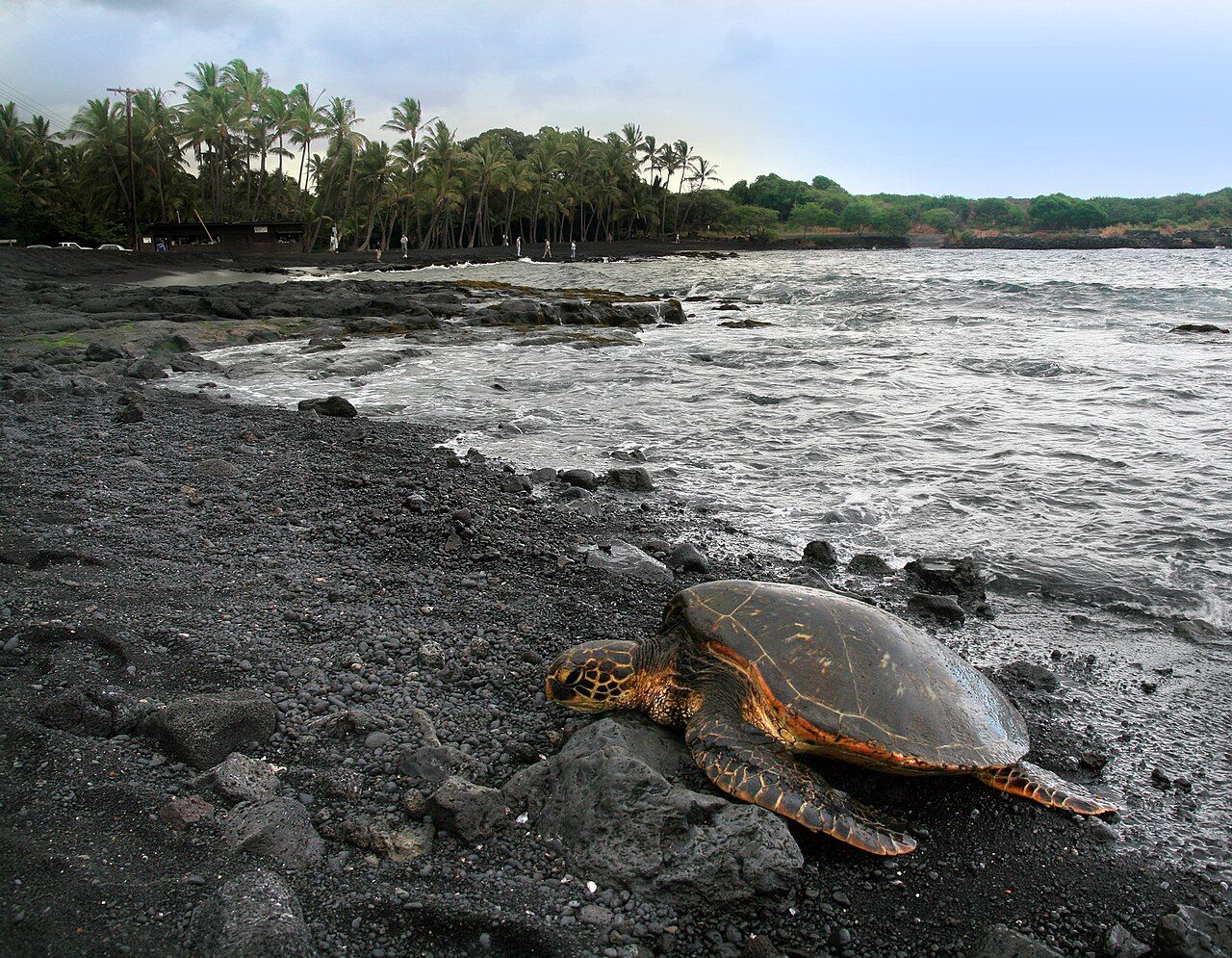
This is the large, quiet district at the south end of Hawaiʻi Island, and Punaluʻu is its best-known beach stop: a small bay edged with black sand, palms and the occasional green sea turtle resting in the sun. From Volcano village, it’s about 40 minutes by road, a straightforward coastward shift that feels like a change of country without turning into a grand expedition.
I like the contrast here. The shore looks composed, almost still, while the ocean can be anything but; it’s a place to look carefully rather than assume the calm view tells the whole story.
2. What makes this sand different?
Punaluʻu’s dark shore comes from lava. When hot lava reaches the ocean, it cools quickly and breaks into small glassy fragments; waves keep grinding those pieces down until they become the coarse, heavy grains underfoot.
That texture is part of the pleasure and part of the warning. The sand holds heat, particularly by midday, and its black surface makes the warmth hard to miss. A sandal-clad walk is more appealing than testing it barefoot when the sun has been on it for a while.
Black sand isn’t a permanent fixture. Without fresh lava feeding the beach, waves gradually carry the grains away, and each handful removed makes that loss a little more immediate. Taking sand from Hawaiʻi’s beaches is against state rules; at Punaluʻu, it also means taking something that can’t easily come back.
So the simplest souvenir is the view, and the practical version is brushing sand from your feet before getting back in the car. Leave every grain on the shore.

3. How much room do the honu need?
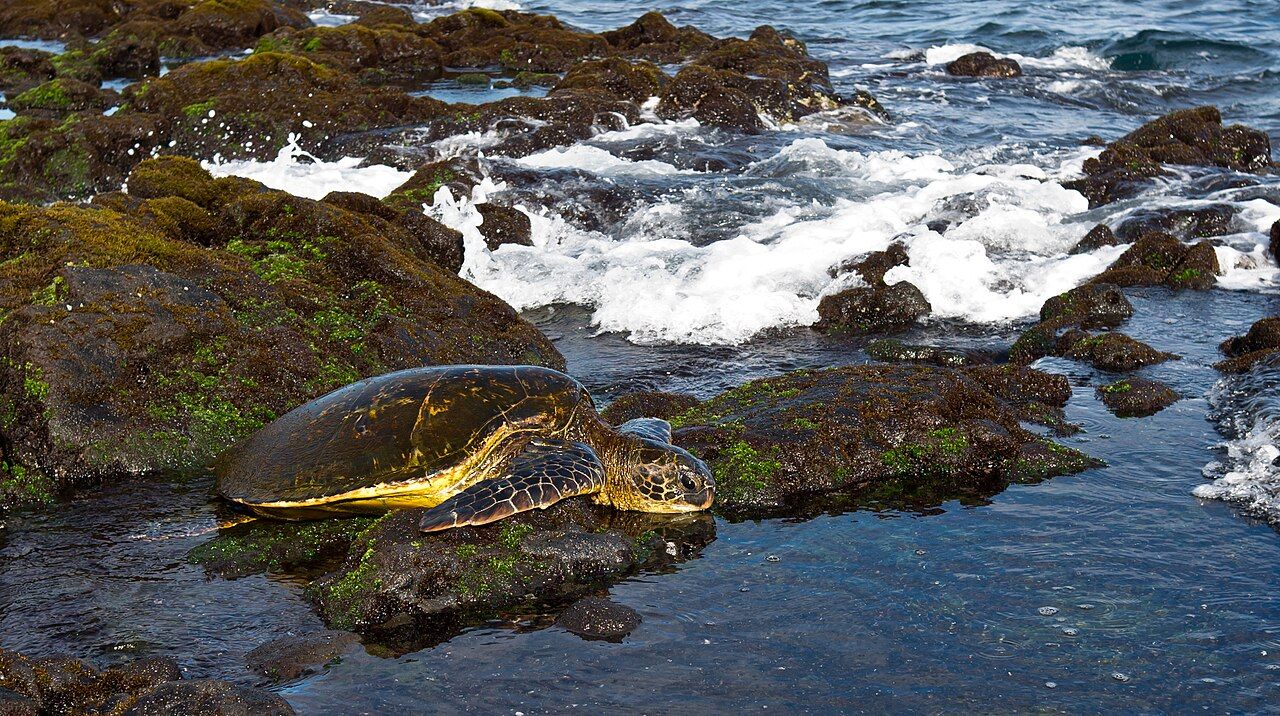
The green sea turtles, or honu, are what bring many people to Punaluʻu. They feed on seaweed along the rocky shore and haul out onto the beach to rest and warm up, sometimes staying for hours. A visit might turn up no turtles at all; on another day, several may lie along the water’s edge, eyes half closed.
It’s a lovely sight, but it works best from a distance. Green sea turtles in Hawaiʻi are protected by law, and touching, feeding, chasing or crowding them isn’t allowed. The common guidance is to stay at least 3 metres (10 feet) away, on land and in the water; plenty of people give them more room.
- Never touch a turtle, even if it seems asleep.
- Leave a clear route between the turtle and the ocean.
- Keep voices low and move slowly nearby.
- Use binoculars or a zoom lens instead of walking closer.
- Skip flash, close-up selfies and drones over the animals.
A disturbed turtle may slip back into the sea before it has rested, spending energy it needs. Volunteers sometimes put up ropes or signs on busy days; I’d treat those as a minimum distance, not an invitation to stand right at the line.
Hawksbill turtles are much rarer, but they nest on some Kaʻū beaches. Marked nesting areas and tracks in the sand deserve that same wide berth.
Read next: A day where Hawaiʻi Island runs out into the wind
4. Does the bay mean calm water?
Not necessarily, and this is where the view can be a little misleading. Punaluʻu looks sheltered, but the Kaʻū coast is exposed and powerful, with strong currents near the mouth of the bay and surf that can rise with little warning.
Swimming isn’t a casual decision here. If going in seems right, the source advice is to stay close to shore on a calm day, watch how the water moves first and never swim alone. There’s no need to turn a beach stop into a swim; the shore and its changing colors are plenty to take in.
There’s also fresh water seeping out beneath the beach and into the sea. The springs leave some patches surprisingly cold, even on a hot day, a small sensory jolt against the heat stored in the black sand. The springs and the pond behind the beach are part of why people settled along this shore long ago.
5. What does a respectful visit look like?
Punaluʻu isn’t just a scenic pause on a road through Kaʻū. The area has a long Hawaiian history, and Kaʻū families still fish, gather food and meet along this coast. That ordinary, continuing use matters; it makes the beach feel like a shared place, not a backdrop arranged for visitors.
Park in marked areas and keep vehicles off the sand. Take rubbish away, fruit peel included, and leave rocks, coral and shells where they are. If a family is fishing or camping, give them room rather than walking through their gear.
Some land near the beach is privately owned, so closed gates and signs are clear boundaries. A quiet visit doesn’t need much ceremony: notice what’s happening around the shore, and don’t leave a mark that somebody else has to deal with.
6. Where does Punaluʻu fit in a Kaʻū day?
The beach sits just off Highway 11, between the national park and the small town of Nāʻālehu. It pairs naturally with South Point and the wider Kaʻū district, since both belong to a drive through this broad southern part of the island.
Morning is the calmest stretch for people and turtles, while later afternoon brings softer light across the palms and dark sand. The exact rhythm of the visit is less important than leaving enough space to look without pressing in on the animals or the families using the coast.
For a longer island drive beyond Kaʻū, the road continues along the southern slopes toward the Kona side. It’s a long drive with few services, so the island driving notes belong in the planning before setting out.
7. What changes when the beach is compared with Volcano?
Up at Volcano, the day calls for a different kind of preparation; at sea level, the beach asks for shade, water and a little thought about hot sand. The sun can feel stronger here than it does up at the village, and there’s little shade beyond the palms.
A hat and reef-safe sunscreen make sense, along with drinking water and sandals that can handle warm sand. Binoculars—or a camera with a longer lens—let the honu stay close in the viewfinder while remaining comfortably far away in real life.
Punaluʻu also sits neatly alongside a return to the national park. A morning at the coast and an afternoon walking the Kīlauea Iki crater floor bring shoreline and volcanic ground into one day, without pretending they’re the same landscape.
8. What’s worth carrying to the shore?
There’s no complicated kit list here, just a few things that make the black sand, strong sun and turtle watching easier to enjoy.
- Sun hat
- Reef-safe sunscreen
- Drinking water
- Sandals
- Binoculars
Punaluʻu is one of my favorite places to watch the coast without needing to take anything from it.