
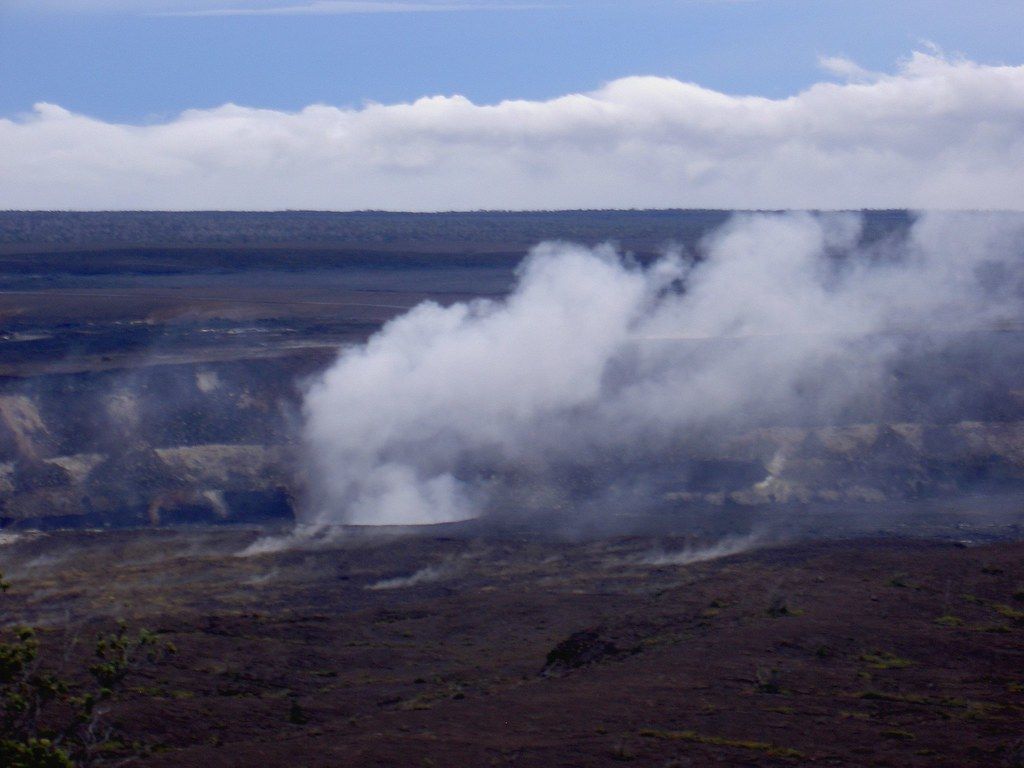
1. What does the air tell you about Kīlauea?
Kīlauea doesn’t need a visible lava flow to make itself known. Gas rises from vents and cracks around the summit, steam can drift over Crater Rim Drive, and a faint haze sometimes settles across the view. During an eruption, the plume can grow large enough to travel across much of the island. The place is active even when the scene looks quiet, and that’s the useful thought to carry along.
Most visits pass without trouble, but gas and ground conditions belong in the day’s plans, not just in the background. I like the summit’s broad, changing views; I like them less when a crowd treats a fence or warning sign as decoration. A little attention makes room for the good part without pretending the volcano is tame.
2. What is vog, and where does it go?
Vog is volcanic smog, formed when sulfur dioxide released from magma mixes with steam and other gases. As the plume moves, sulfur dioxide reacts with oxygen, moisture, and sunlight, making tiny sulfate particles that create haze. Near the vents, there’s more raw sulfur dioxide in the air; farther away, the fine particles make up more of what’s drifting through.
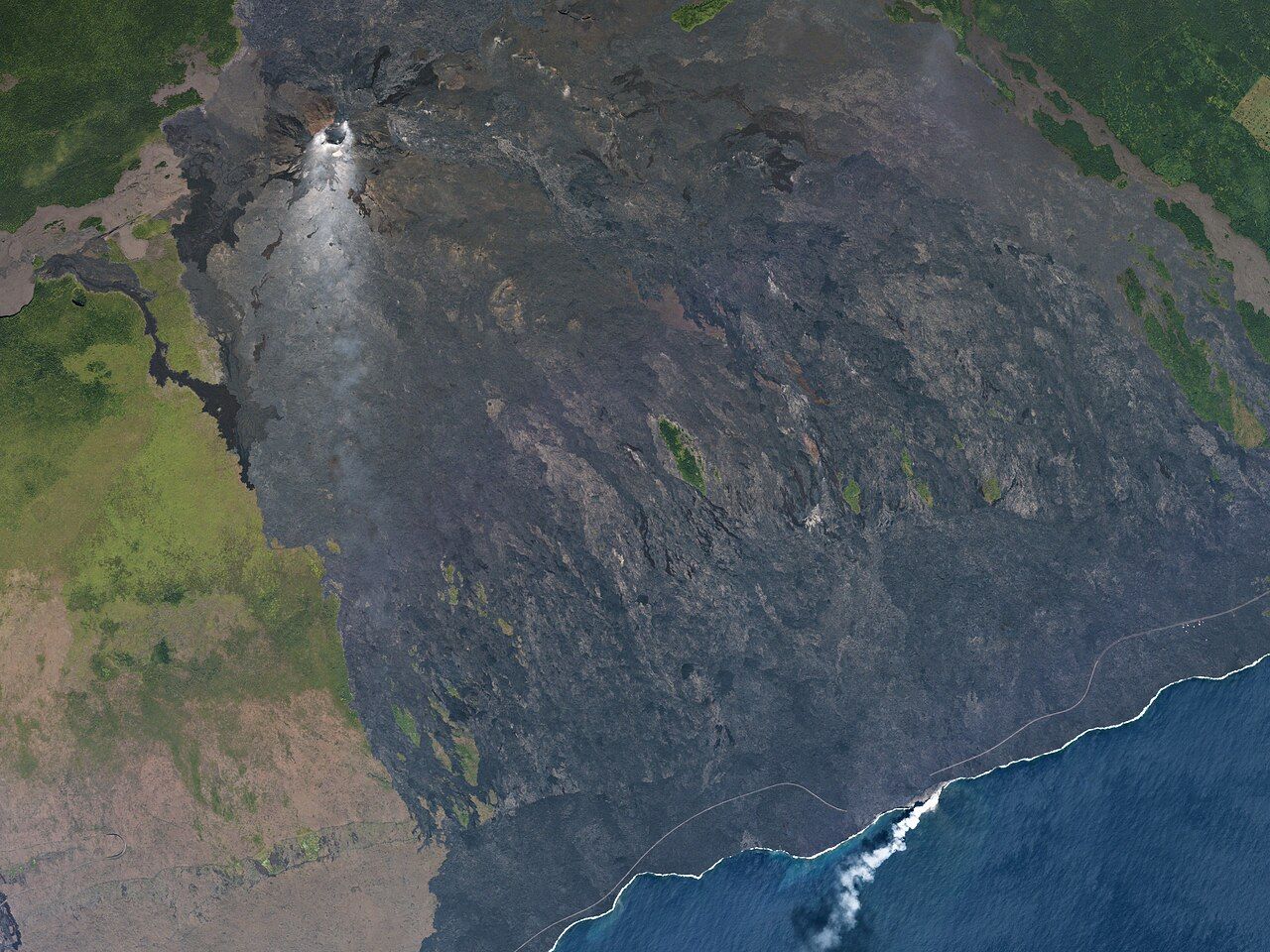
The wind decides which parts of the island get the plume. Most days, trade winds arrive from the northeast and carry it southwest, around the island’s south side and up the Kona coast, where it can linger in afternoon haze. When those winds fail and turn around, vog can settle over Hilo, Volcano, and the east side instead. The same summit can mean different air downwind.

3. Who feels vog most?
Volcanic gas and vog can irritate eyes, nose, throat, and lungs. Coughing, a sore throat, headaches, and tiredness are common effects; for most healthy people, they pass as the air clears. That’s not a promise that every person will react the same way, though, and it’s worth taking symptoms seriously rather than trying to tough them out.
Extra care makes sense for people with asthma or other lung conditions, heart disease, infants and young children, pregnant women, and older adults. Anyone in those groups can talk with a doctor before traveling about precautions and bring any needed medication. A travel guide can’t make medical decisions for someone.
Signs near high-gas places, including the Sulphur Banks and some caldera overlooks, tell sensitive visitors to stay away. Take those signs literally. If someone starts feeling unwell, leave the area and move upwind; when the haze thickens, a shorter walk is a better choice than pushing through it.
4. What should shape the day’s plan?
Eruptions, gas levels, and closures can change from week to week, and sometimes from hour to hour. The useful routine is simple: read the national park’s current alerts and closures, read the volcano observatory’s latest eruption update, and look at the state’s vog and air-quality information for the area on the itinerary. On arrival, the visitor center or a ranger can explain what has changed.
A closure isn’t a scenic suggestion. Areas close for real risks, including gas, unstable ground, or earthquakes, and slipping past a barrier can put rescuers in danger as well. If a main overlook is off limits or the air is poor, changing the route is part of visiting, not a defeat.
Read next: Crater Rim Drive, in pieces and still worth taking slowly
5. Where can the ground give way?
The summit changed dramatically in 2018, when the caldera floor collapsed and parts of the rim cracked and slumped. Earth cracks cross the landscape; some are deep and concealed beneath vegetation. Crater edges can be undercut, then give way without warning. Those details make the marked trail the sensible line, not a fussy rule imposed on a view.
Stay behind barriers, keep children close near overlooks, and don’t cross a fence for a photograph. Fresh lava deserves distance too: its surface can conceal hollows and sharp glass. Earthquakes are common on the island, although most are small; stronger shaking can set off rockfalls in craters and along steep walls. If shaking starts near a cliff, move away from the edge.
I’m happiest with a walk that keeps its distance from a doubtful rim. There’s plenty to look at without testing whether a crack is deeper than it appears, and a photograph isn’t improved by standing on the wrong side of a barrier.
6. What changes on a heavy vog day?
Thick haze is a good reason to shorten a walk and skip hard exertion, since exercise makes breathing deeper. Time indoors or in a car with the windows closed and the air set to recirculate can limit exposure. Water can soothe a scratchy throat; ordinary dust masks do little against volcanic gas, so they aren’t a substitute for leaving a poor-air area.
Chest tightness or difficulty breathing calls for stopping, leaving the area, and seeking medical help. Vog often passes when the wind shifts, so a change of plan for an afternoon may be all that’s needed. I’d rather trade a planned overlook for a different walk than turn a day out into a test of endurance.
The summit is cool and often wet, but the land drops quickly toward the lower Chain of Craters Road and the coast. There, sun reflects off black lava, heat builds fast, shade is scarce, and there’s no drinking water. Bring plenty of water, use a hat and sunscreen, and turn back if anyone feels faint or confused.
7. What happens where lava meets the sea?
When lava reaches the ocean, boiling seawater creates laze, a white plume containing acid and tiny glass particles. New land at the sea’s edge, sometimes called a lava delta, can collapse into the water without warning. If lava is entering the sea, stick to official viewing areas and keep away from the edge.
None of this needs to turn a visit into a nervous march. Millions of people visit the volcano safely, while park staff and observatory scientists keep a close watch. The steadier approach is to arrive informed, notice the air and ground, and be willing to choose another trail if gas is high or an area is closed. The Kīlauea Iki crater walk and Nāhuku, the lava tube, can be alternatives on a high-gas day at the main overlooks.
8. What belongs in the field notebook?
For the larger picture, a short history of the eruptions explains why the summit looks as it does. And the summit’s cool, wet weather has its own packing list, with rain, cold nights and what to pack worth a look before setting out.
- Read park alerts, observatory updates, and the state’s vog and air-quality information.
- Carry water, medication, a hat, and sunscreen; use layers for cool, wet summit weather.
- Stay on marked trails, behind barriers, and out of closed areas.
- For another walk, see The Kīlauea Iki crater walk or Nāhuku, the lava tube.